A slow-draining sink or shower is easy to overlook, especially when the water eventually disappears. You might notice water pooling around your feet during a shower, a kitchen sink taking longer to empty, or a bathroom basin that gurgles after use. At first, these problems may seem like minor inconveniences.
However, slow drains in Healdsburg homes can sometimes indicate more than an ordinary buildup of hair, soap, or food particles. A recurring blockage, multiple affected fixtures, or wastewater backing up into another drain may suggest a problem deeper inside the plumbing system.
Knowing the difference between a simple clog and a more serious drainage issue can help you avoid unnecessary repairs, protect your home, and decide when professional assistance is appropriate.
At Dejusto Plumbing, we help homeowners throughout Healdsburg and Sonoma County address drainage problems, from stubborn fixture clogs to more complicated sewer line concerns. If you are noticing recurring drainage problems, our professional drain cleaning services can help identify and address the underlying issue.
Let’s look at why household drains slow down, what warning signs deserve attention, and how to respond before a minor inconvenience becomes a larger plumbing problem.
Most residential drainage systems rely on gravity to carry wastewater away from sinks, showers, bathtubs, toilets, and appliances.
When the inside of a drainpipe becomes partially obstructed, water has less room to flow. Instead of moving freely through the plumbing system, wastewater begins draining more slowly.
A partial blockage can develop gradually. Grease, hair, soap residue, food particles, and other materials may accumulate over months or years.
Other drainage problems may involve damaged piping, improper pipe slope, tree root intrusion, or restrictions in the main sewer line.
The important distinction is where the obstruction is located and whether the problem keeps returning.
A single slow bathroom sink may have a localized clog. Several slow drains throughout the house may indicate a restriction farther downstream.
Understanding that difference is the first step toward choosing the right solution.
Hair and soap residue are among the most common causes of slow bathroom drainage.
Hair can collect around the drain stopper, strainer, or inside the drainpipe. Soap residue and other debris gradually attach to the hair, creating a larger obstruction.
You may notice:
Water pooling around your feet during showers.
A bathtub taking several minutes to empty.
A bathroom sink draining slowly after brushing your teeth.
Visible hair or debris around the drain opening.
If the blockage is near the drain opening, removing accessible debris may restore normal flow.
However, if the problem returns shortly after cleaning, material may be collecting deeper inside the drain assembly.
Repeated slow drainage is a reason to investigate rather than continuing to treat only the visible buildup.
Kitchen sinks experience a different type of buildup.
Cooking grease, oils, food particles, and dishwashing residue can accumulate inside the drainpipe.
Even when grease enters the sink as a liquid, it may cool and adhere to pipe walls farther down the line.
Over time, additional debris can attach to the residue and narrow the available passage for wastewater.
Common symptoms include:
Water draining slowly after washing dishes.
Gurgling sounds from the kitchen sink.
Recurring blockages despite cleaning the strainer.
Unpleasant odors around the drain.
Avoid pouring cooking grease or oil into the sink. Instead, allow it to cool and dispose of it appropriately.
A sink strainer can also help prevent food scraps from entering the drainage system.
If grease buildup is already restricting the pipe, professional cleaning may be needed to remove the obstruction thoroughly.
Minerals present in household water can sometimes contribute to deposits inside plumbing fixtures and pipes.
The amount and type of buildup depend on the water source, plumbing materials, and conditions inside the system.
Mineral deposits may narrow a pipe over time or create rough surfaces that trap additional debris.
However, a slow drain should not automatically be blamed on hard water. Hair, grease, and other ordinary obstructions are often more likely explanations.
If drainage problems persist after accessible debris is removed, a plumber can inspect the system and determine whether deposits, pipe deterioration, or another issue is responsible.
A slow drain becomes more concerning when the problem affects several plumbing fixtures.
Most homes have branch drainpipes that connect individual fixtures to a larger building drain and sewer line.
If the main line becomes partially obstructed, wastewater from multiple fixtures may have difficulty leaving the property.
Possible warning signs include:
More than one drain becoming slow.
Gurgling sounds from toilets or nearby fixtures.
Water rising in a shower when another fixture drains.
Wastewater appearing at a low-level drain.
Drainage problems that become worse during heavy household water use.
These symptoms do not automatically prove that the main sewer line is blocked, but they justify professional inspection.
If you suspect a deeper obstruction, avoid running additional water until the cause has been evaluated.
Tree roots naturally seek moisture and may enter underground sewer pipes through cracks, separated joints, or other openings.
Once inside, roots can expand and trap toilet paper, grease, and other wastewater debris.
This may cause gradually worsening drainage or recurring blockages.
Homes with mature trees near underground sewer piping can be susceptible, although the presence of trees alone does not mean a sewer line is damaged.
Potential symptoms include recurring drain problems, multiple affected fixtures, or sewer backups.
A professional sewer camera inspection may help determine whether roots are present and whether the pipe itself requires repair.
Simply clearing the roots may not permanently resolve the issue if the pipe has an opening that allows them to return.
Drainage problems are not always caused by material stuck inside a pipe.
Some homes have aging plumbing materials, deteriorated joints, or pipes that have shifted over time.
Depending on the pipe material and installation conditions, problems can include:
Corrosion or internal deterioration.
Cracks or separated joints.
Pipe sections that have settled.
Rough interior surfaces that collect debris.
Improperly sloped drain lines.
A sagging section of pipe, sometimes called a belly, can hold standing water and allow solids to accumulate.
If the underlying issue is structural, ordinary drain cleaning may provide only temporary relief.
The appropriate repair depends on the pipe condition and the location of the defect.
Household drains are designed to carry wastewater and appropriate waste materials, not every product labeled disposable.
Items such as wipes, cotton swabs, paper towels, hygiene products, and small objects can become lodged inside plumbing lines.
Even products marketed as flushable may contribute to blockages.
A foreign object may partially restrict the pipe at first, allowing some water to pass while gradually trapping additional debris.
If you suspect an object has entered the drainage system, avoid repeatedly flushing or using chemicals to force it through.
Professional removal may be necessary, particularly if the object is lodged beyond an accessible trap.

The location, frequency, and severity of the symptoms can provide useful clues.
| Symptom | Possible explanation | Recommended response |
|---|---|---|
| One bathroom sink drains slowly | Hair or debris near the stopper or trap | Inspect accessible components |
| Kitchen sink drains slowly after repeated grease disposal | Grease and food residue | Stop grease disposal and assess cleaning needs |
| Several fixtures drain slowly | Shared branch or main drain restriction | Schedule professional inspection |
| Drain improves but clogs again soon | Remaining buildup or underlying pipe problem | Investigate the recurring cause |
| Toilet gurgles when another fixture drains | Possible shared drain or venting issue | Have the plumbing system evaluated |
| Wastewater backs up into a shower or tub | Possible downstream blockage | Stop using affected fixtures and seek prompt service |
| Sewage appears inside the home | Significant drainage or sewer problem | Avoid contact and arrange urgent assistance |
These patterns are helpful indicators, not definitive diagnoses.
For example, gurgling can result from several drainage or venting conditions. A plumber may need to inspect the system to identify the exact cause.
The most important warning sign is a problem that affects multiple fixtures or produces wastewater backup.
A drain that becomes slow again shortly after cleaning may have an obstruction that was never fully removed.
For example, removing hair from a shower strainer can improve water flow temporarily while leaving buildup farther inside the pipe.
Similarly, a basic drain snake may create a small opening through grease or debris without cleaning the entire affected area.
Water can begin flowing again, but remaining material may quickly collect new debris.
Other recurring causes include:
Tree roots inside underground piping.
A damaged or sagging pipe.
A recurring grease accumulation.
A partially obstructed shared drain.
A foreign object that remains lodged in the line.
If the same drain requires frequent attention, repeatedly clearing it without identifying the cause can become expensive and frustrating.
A professional drain inspection can help determine whether the issue is ordinary buildup or a condition requiring a different repair approach.
Many homeowners reach for a chemical drain cleaner when water begins draining slowly.
Although some products may dissolve certain types of organic material, they are not suitable for every obstruction.
Chemical cleaners may fail to remove tree roots, foreign objects, damaged pipe sections, or substantial grease accumulation.
Some products are highly corrosive and can cause burns or create hazards for anyone working on the drain afterward.
Repeated use may also damage certain plumbing components, depending on the product, concentration, and pipe condition.
Safer first steps include:
Remove visible debris from an accessible drain strainer.
Check a removable sink stopper for trapped hair.
Use a suitable plunger for an ordinary localized clog.
Avoid adding more water if wastewater is backing up.
Contact a plumber if the obstruction persists or returns.
Never mix drain cleaning chemicals with other cleaning products.
If you have already used a chemical cleaner, tell the plumber before they begin work so they can take appropriate precautions.
Not every slow drain requires an immediate service appointment.
For a minor, isolated problem, a few simple checks may help.
Check whether the problem is limited to one sink or shower.
If several drains are slow, avoid assuming they all have separate clogs.
Multiple affected fixtures may indicate a shared drainage restriction.
If the slow drain has a removable strainer or stopper, inspect it for visible hair, soap residue, or food particles.
Wear gloves and follow the fixture manufacturer’s instructions.
Avoid forcing parts that appear corroded or difficult to remove.
A properly selected plunger may help clear a minor obstruction.
Use a plunger appropriate for the fixture and avoid excessive force.
Do not plunge a drain containing chemical cleaner, as splashing can cause injury.
After removing debris or clearing a minor obstruction, run a modest amount of water and check whether the fixture drains normally.
If the drain remains slow, stop repeating the same procedure.
If the problem returns within days or weeks, document which fixture is affected and whether other drains show similar symptoms.
This information can help a plumber narrow down the cause.
If wastewater begins rising into a shower, bathtub, floor drain, or another fixture, stop using the affected plumbing system.
Continuing to run water can worsen an existing backup.
Professional assistance is appropriate when wastewater is backing up or the source of the obstruction is uncertain.
Professional drain cleaning becomes particularly useful when the obstruction is deeper than an accessible fixture component or when repeated attempts have not solved the problem.
A plumber can assess the symptoms, identify the likely location of the restriction, and select an appropriate cleaning method.
Depending on the condition of the plumbing system, the service may involve:
Mechanical drain snaking.
Removing debris from an accessible trap.
Cleaning a shared branch drain.
Sewer camera inspection when indicated.
Hydro jetting for suitable pipes and blockage conditions.
Evaluating damaged or deteriorated piping.
Not every drain requires hydro jetting or camera inspection.
The appropriate method depends on the obstruction, pipe material, accessibility, and condition of the line.
For homeowners dealing with recurring slow drains in Healdsburg, professional diagnosis can help avoid repeated temporary fixes.
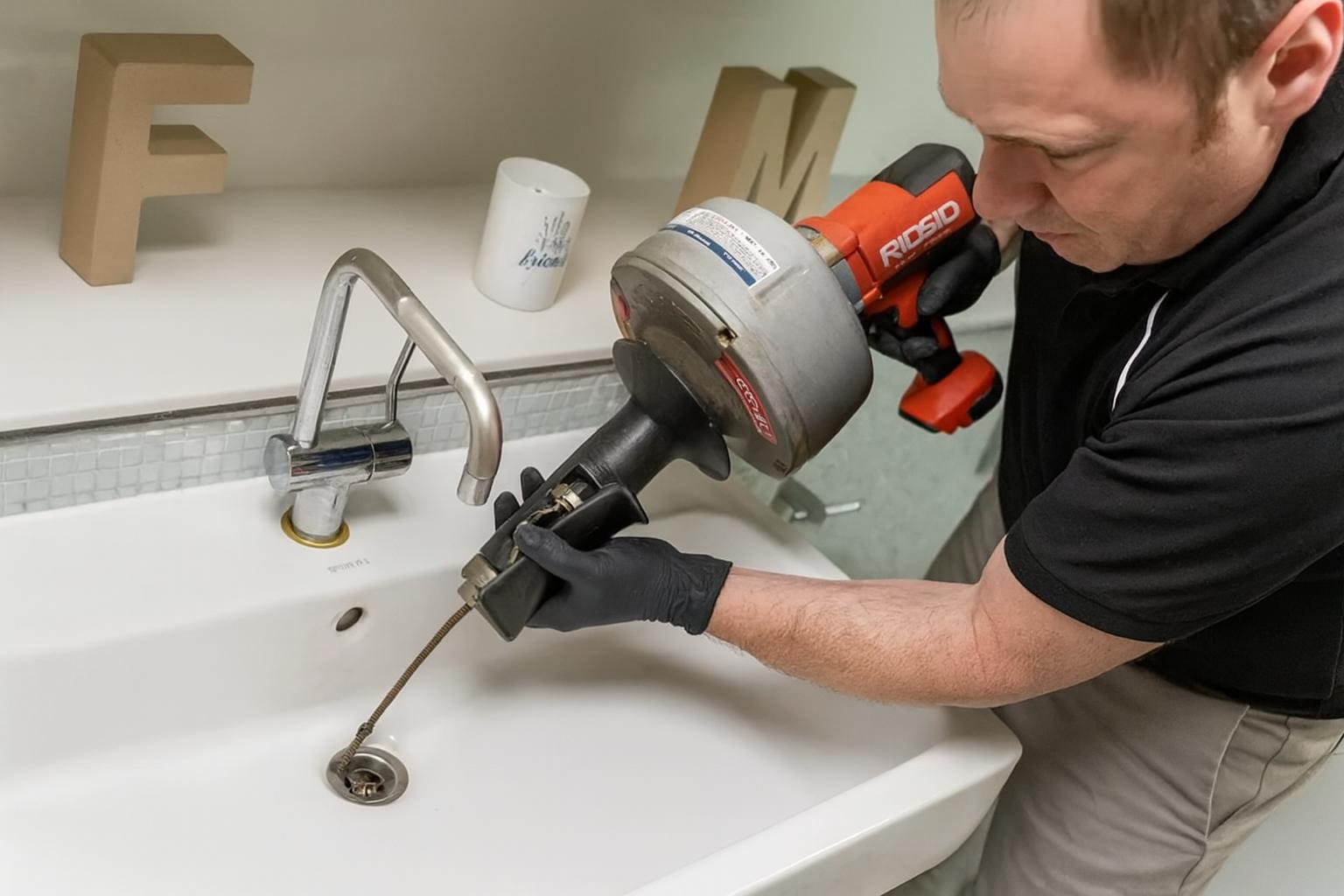
Two common professional drain cleaning methods are mechanical snaking and hydro jetting.
A drain snake or auger uses a flexible cable and an appropriate attachment to break through, retrieve, or clear certain obstructions.
This method is often effective for localized clogs, including some hair accumulations and blockages inside branch drains.
Its effectiveness depends on the obstruction and the condition of the pipe.
Hydro jetting uses pressurized water and specialized equipment to clean buildup from the inside of suitable drain and sewer pipes.
It may be appropriate for substantial grease deposits, recurring debris accumulation, and some sewer line cleaning situations.
However, it is not automatically the best choice for every home.
Damaged or deteriorated piping may require inspection before high-pressure cleaning is considered.
| Factor | Drain snaking | Hydro jetting |
|---|---|---|
| Method | Mechanical cable and attachment | Pressurized water |
| Common use | Localized clogs and selected obstructions | Suitable lines with substantial buildup |
| Removes pipe-wall residue | May be limited | Can provide more thorough cleaning |
| Suitable for every pipe | No | No |
| Requires professional assessment | Recommended for complex clogs | Yes |
A qualified plumber can recommend a method based on the actual condition of the drainage system rather than treating every slow drain the same way.
Yes, particularly when slow drainage affects multiple fixtures or is accompanied by recurring backups.
A sewer line problem can develop from roots, accumulated debris, damaged piping, or other restrictions.
However, one slow sink is not enough evidence to conclude that the main sewer line is failing.
The pattern of symptoms matters.
If a shower backs up when the washing machine drains, for example, the restriction may be located in a shared section of the drainage system.
If toilets, sinks, and tubs throughout the home are affected, the main building drain or sewer line may need attention.
For a more detailed explanation of sewer-related symptoms, read our guide to sewer line problems in Healdsburg.
That article covers additional warning signs and situations in which a sewer inspection may be necessary.
Healdsburg has a mix of established neighborhoods, older properties, renovated homes, and newer residential construction.
Plumbing conditions can vary considerably between properties.
Some older homes may have aging drain materials or pipe sections that have been repaired or modified over time.
Other properties may experience ordinary fixture clogs unrelated to the age of the plumbing system.
The important point is that recurring drainage problems deserve attention regardless of the home’s age.
Ignoring a persistent blockage can allow debris to accumulate further, increasing the risk of a complete obstruction or wastewater backup.
In homes with multiple bathrooms, an issue may also go unnoticed when a less frequently used fixture drains slowly.
Periodic checks and early repairs can help homeowners avoid unexpected disruptions.
Dejusto Plumbing serves Healdsburg and nearby Sonoma County communities. Learn more about our Healdsburg plumbing service area.
Good drainage habits cannot prevent every plumbing problem, but they can reduce avoidable buildup.
Install strainers in showers, tubs, and kitchen sinks to catch hair, food scraps, and other debris before they enter the pipes.
Dispose of cooking oil and grease in an appropriate container rather than washing them down the drain.
Only flush human waste and toilet paper. Dispose of wipes and hygiene products in the trash, even when their packaging suggests they can be flushed.
Periodically remove and clean sink stoppers and shower strainers according to manufacturer instructions.
If a fixture begins draining more slowly than usual, investigate before the obstruction becomes severe.
A drain that repeatedly clogs may need more than surface cleaning.
Professional inspection can help determine whether buildup, pipe condition, or another underlying issue is responsible.