
Discovering water around your water heater can be stressful, especially when you’re unsure whether the problem is a loose connection or a serious tank failure. If your water heater is leaking in Rohnert Park, taking the right steps early can help prevent water damage, protect your home’s plumbing system, and reduce safety risks.
Water heater leaks can develop around supply connections, drain valves, pressure relief valves, or the storage tank itself. Some problems may require a relatively straightforward repair, while others indicate that the water heater needs replacement.
At Dejusto Plumbing, we help homeowners throughout Rohnert Park and Sonoma County diagnose water heater problems and understand their repair options. Our water heater repair and installation services are designed to address the underlying problem rather than simply treating visible symptoms.
Here’s what you should know when you discover a leaking water heater.
If you notice water pooling around your water heater, don’t ignore it. Even a slow leak can cause damage to surrounding flooring, drywall, or stored belongings.
Before approaching the water heater, look for standing water near electrical connections, damaged wiring, smoke, unusual sounds, or signs of a gas leak.
If you smell gas, leave the area immediately, avoid switches and electrical devices, and contact your gas utility or emergency services from a safe location.
If water has reached electrical equipment, don’t touch the water heater or attempt to operate nearby switches or breakers. Contact a qualified professional.
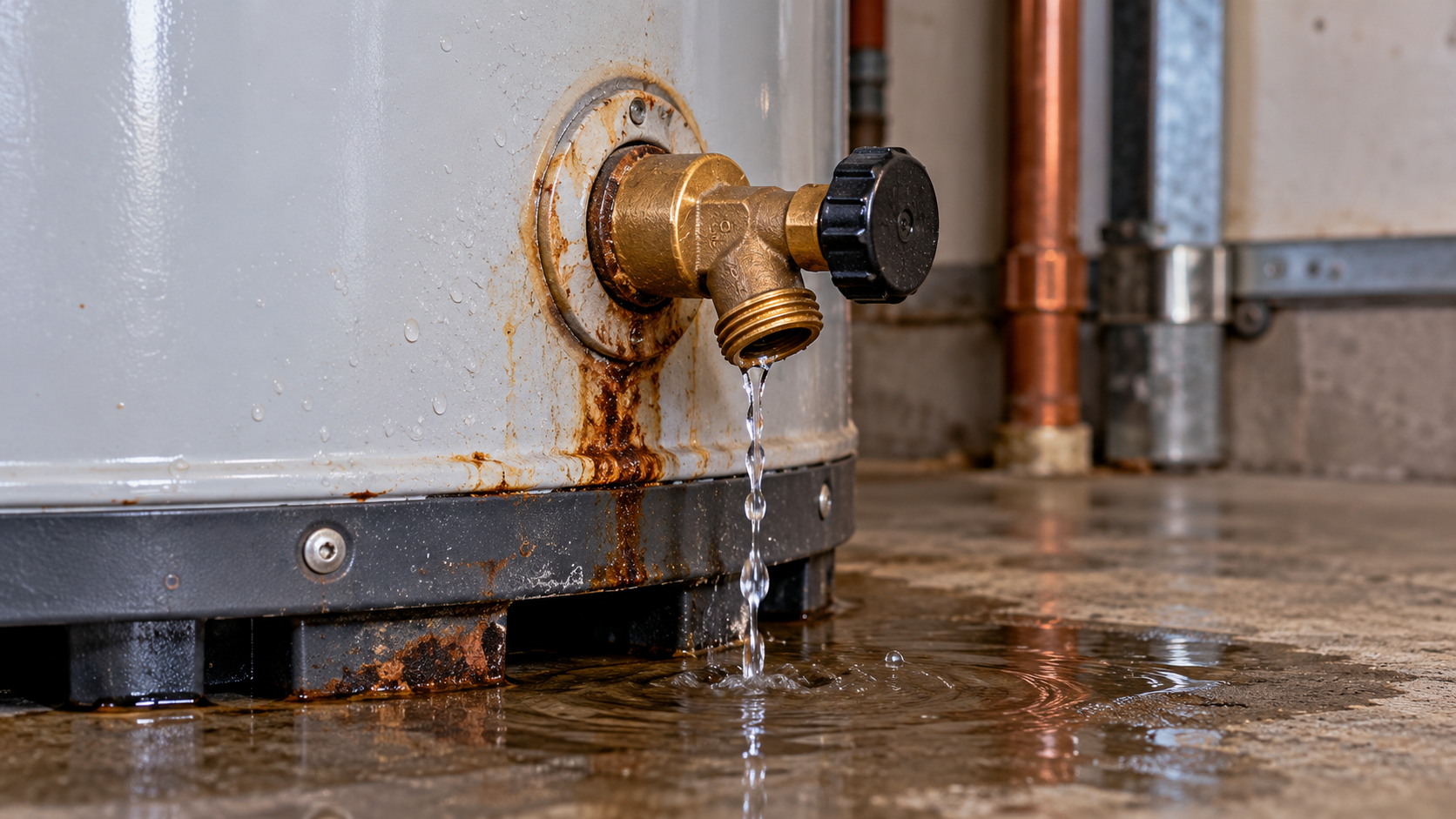
Most water heaters have a cold-water shutoff valve on the incoming supply line.
If the valve is accessible and you can reach it without entering standing water or encountering another hazard, shutting it off may help reduce additional leakage.
If the valve is damaged, stuck, or inaccessible, don’t force it. You may need to shut off the home’s main water supply instead.
A leaking water heater may need to be shut down to avoid additional damage or unsafe operation.
For an electric water heater, follow the manufacturer’s shutdown instructions. Do not approach or operate electrical controls if water has created a shock hazard.
For a gas water heater, use the manufacturer’s designated shutdown procedure only when conditions are safe and you understand the controls. If you suspect a gas leak, evacuate rather than attempting to operate the appliance.
Take photos of the affected area from a safe location.
Note whether water appears around the top connections, drain valve, relief valve discharge, or base of the unit.
Avoid removing panels, disconnecting pipes, or opening safety valves to investigate.
A qualified plumber can determine whether the leak comes from a replaceable component or a damaged storage tank.
If water is spreading rapidly or causing active property damage, arrange prompt professional assistance.
Water heaters have inlet and outlet connections that carry cold water into the unit and distribute hot water throughout the home.
Over time, fittings, connectors, or seals can deteriorate or develop leaks.
Common signs include:
Moisture around the top of the water heater
Drips along supply connections
Corrosion around fittings
Water running down the outside of the tank
A leaking connection may be repairable, depending on its condition and the surrounding plumbing.
However, water traveling down the outside of a heater can make the source difficult to identify without an inspection.
Traditional storage water heaters have a drain valve near the bottom of the tank.
This valve is used during certain maintenance procedures, including draining the tank.
If the valve becomes damaged, deteriorates, or fails to seal correctly, water may drip from the valve opening or surrounding connection.
What to look for: Moisture concentrated around the drain valve rather than the tank’s entire base.
Some drain valve problems can be repaired without replacing the complete water heater.
Avoid tightening or manipulating an aging valve yourself, since a damaged component may break and release additional water.
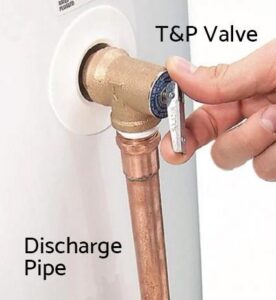
The temperature and pressure relief valve, commonly called the T&P valve, is an important safety component.
It is designed to release water when unsafe temperature or pressure conditions occur inside a storage water heater.
If water is coming from the relief valve discharge pipe, possible causes include:
Excessive water pressure
Thermal expansion
High water temperature
A malfunctioning relief valve
Other conditions affecting the system
Important: Never plug, cap, or block a relief valve discharge pipe. The valve is a critical safety device.
A plumber should determine why the valve is releasing water before deciding whether the valve or another component needs attention.
A storage water heater contains a tank that holds heated water.
Over time, internal corrosion can weaken the tank, particularly as protective components deteriorate.
If corrosion eventually causes the tank itself to leak, replacing the water heater is generally necessary because the tank isn’t designed for ordinary patch repairs.
Possible warning signs include:
Water collecting beneath the heater
Rust or corrosion around the lower tank area
Repeated leakage after other components have been checked
An older unit with declining performance
Water beneath a heater doesn’t automatically prove the tank has failed. Leaks from fittings, valves, or nearby plumbing can also collect at the base.
Professional diagnosis is important before making a replacement decision.
High water pressure can place additional stress on plumbing connections and water heater components.
Thermal expansion can also occur when heated water expands inside a closed plumbing system.
If pressure isn’t managed appropriately, the system may experience repeated relief valve discharge or stress on fittings.
Possible signs include recurring drips from the relief valve discharge, pressure fluctuations, or leaks at plumbing connections.
A licensed plumber can measure water pressure and evaluate whether the system’s pressure regulator, expansion tank, or other components are functioning correctly.
Installing a new relief valve without addressing excessive pressure may not solve the underlying problem.
Not every puddle around a water heater is caused by a plumbing leak.
Under certain operating conditions, condensation may form on a gas storage water heater, particularly when a large amount of cold water enters the tank.
Condensation can sometimes drip onto nearby surfaces and resemble a small leak.
However, persistent pooling water should never be dismissed as normal condensation without checking the equipment.
If you’re unsure where the moisture is coming from, have the heater inspected.
Sometimes the water heater isn’t actually leaking.
Water from a nearby supply line, washing machine connection, drain, or other plumbing component can travel across the floor and collect around the water heater.
This is particularly confusing when the heater is installed in a garage, utility closet, or laundry area.
Look for visible moisture paths, but avoid moving equipment or dismantling connections.
Identifying the actual source can prevent unnecessary water heater replacement.
Tankless water heaters don’t store a large reservoir of heated water, but they can still develop leaks.
Potential sources include:
Water inlet and outlet connections
Internal seals or components
Service valves
Condensate drainage components on condensing models
Freeze damage or deterioration
A tankless unit displaying an error code or showing visible moisture should be inspected according to the manufacturer’s recommendations.
Homeowners considering repairs or an upgrade can learn more about our tankless water heater installation and repair services.
In some situations, yes.
A leaking supply connector, drain valve, or other serviceable component may be repairable without replacing the entire water heater.
However, a leaking storage tank usually requires replacement.
The right decision depends on several factors:
| Situation | Typical recommendation |
|---|---|
| Loose or damaged supply connection | Inspect and repair or replace the affected component |
| Leaking drain valve | Evaluate for valve repair or replacement |
| Relief valve releasing water | Diagnose pressure, temperature, and valve condition |
| Corroded or leaking storage tank | Water heater replacement is usually required |
| Tankless connection or component leak | Inspect the affected connection or component |
| Unidentified water around heater | Locate the source before recommending repair |
These are general guidelines. A professional inspection is needed to determine the appropriate repair for a particular unit.
Water heater repair costs vary based on the leak’s location, equipment type, accessibility, required parts, and whether the storage tank needs replacement.
For example, replacing a leaking connector is a different job from installing a new water heater.
A tankless repair may also involve different parts and diagnostic requirements than a conventional storage model.
Before approving work, ask for a clear explanation of the problem, the recommended repair, and whether replacement would provide better long-term value.
Dejusto Plumbing can help homeowners understand their options after evaluating the equipment.
Replacement may be the more practical choice when:
The storage tank itself is leaking
The heater has extensive corrosion
The unit requires repeated repairs
Replacement parts are unavailable or impractical
The equipment is near or beyond its expected service life
Repair costs are high relative to the remaining useful life
Traditional storage water heaters often last approximately 8–15 years, although actual lifespan varies with water quality, installation, maintenance, and usage.
Age alone doesn’t determine whether a water heater should be replaced. Its current condition and the source of the leak are more important.
Regular maintenance can help identify developing problems before they cause significant damage.
Have accessible connections, valves, and the surrounding area checked for signs of leakage, corrosion, or deterioration.
Some water heaters require periodic flushing, anode rod inspection, or other maintenance.
Older equipment should be evaluated before draining or flushing, particularly when maintenance history is unknown.
Excessive pressure can contribute to plumbing problems throughout the home.
If you notice recurring relief valve discharge or pressure fluctuations, arrange a professional evaluation.
Avoid blocking access to the water heater with storage boxes or other items.
Clear access makes it easier to notice leaks and allows technicians to inspect and service the equipment.
Depending on the installation, a properly configured drain pan, leak alarm, or automatic shutoff system may help reduce damage from certain leaks.
These measures don’t replace maintenance or professional repairs.
Dejusto Plumbing serves homeowners throughout Rohnert Park, Santa Rosa, and surrounding Sonoma County communities.
Led by Mike Dejusto, who brings more than 35 years of plumbing experience, our team focuses on honest workmanship, practical recommendations, and dependable service.
Whether your water heater needs a minor repair or complete replacement, understanding the source of the leak is the first step toward making the right decision.
If you live in the area, explore our Rohnert Park plumbing services to learn more about how we help local homeowners.