
Your water heater is one of the hardest-working appliances in your home. It supplies hot water for showers, laundry, washing dishes, and everyday cleaning. Most homeowners rarely think about it until the water turns cold, the tank starts leaking, or an unexpected repair becomes necessary.
If you are considering water heater replacement in Cotati, the biggest question is whether your existing unit can be repaired or whether investing in a new system makes more sense.
A water heater does not automatically need replacement just because it reaches a certain age. However, recurring repairs, corrosion, unreliable hot water, and leaks from the storage tank itself can indicate that replacement is the more practical option.
Knowing the warning signs can help you avoid unexpected water damage, compare replacement options, and make an informed decision before your water heater fails completely.
Dejusto Plumbing provides water heater repair and installation services for homeowners in Cotati and throughout Sonoma County. Whether your current unit needs a straightforward repair or a complete replacement, understanding its condition is the first step.
This guide explains how long water heaters typically last, the warning signs of failure, when repairs are worthwhile, and what Cotati homeowners should consider before installing a new unit.
The lifespan of a water heater depends on its design, maintenance history, water conditions, installation quality, and daily use.
Traditional storage tank water heaters commonly last around 8 to 12 years, although some operate longer. Tankless water heaters may last 15 to 20 years or more when properly installed and maintained.
These are general planning ranges, not guaranteed expiration dates.
| Water heater type | Common planning lifespan | Main considerations |
|---|---|---|
| Gas storage tank | Approximately 8–12 years | Tank corrosion, burner condition, sediment |
| Electric storage tank | Approximately 8–12 years or longer | Heating elements, thermostat, tank condition |
| Gas tankless | Approximately 15–20+ years | Heat exchanger, maintenance, water quality |
| Electric tankless | Varies by model and usage | Electrical capacity, components, water conditions |
| Heat pump water heater | Often around 10–15 years | Compressor, tank, installation environment |
A well-maintained system may exceed these estimates. Another unit may fail earlier because of corrosion, heavy use, or neglected maintenance.
The U.S. Department of Energy provides additional guidance on water heating technologies and efficiency.
For Cotati homeowners, age should be considered alongside the unit’s actual condition.
A ten-year-old water heater that operates reliably may not require immediate replacement. But a ten-year-old unit with repeated breakdowns, corrosion, and leaking connections deserves closer attention.
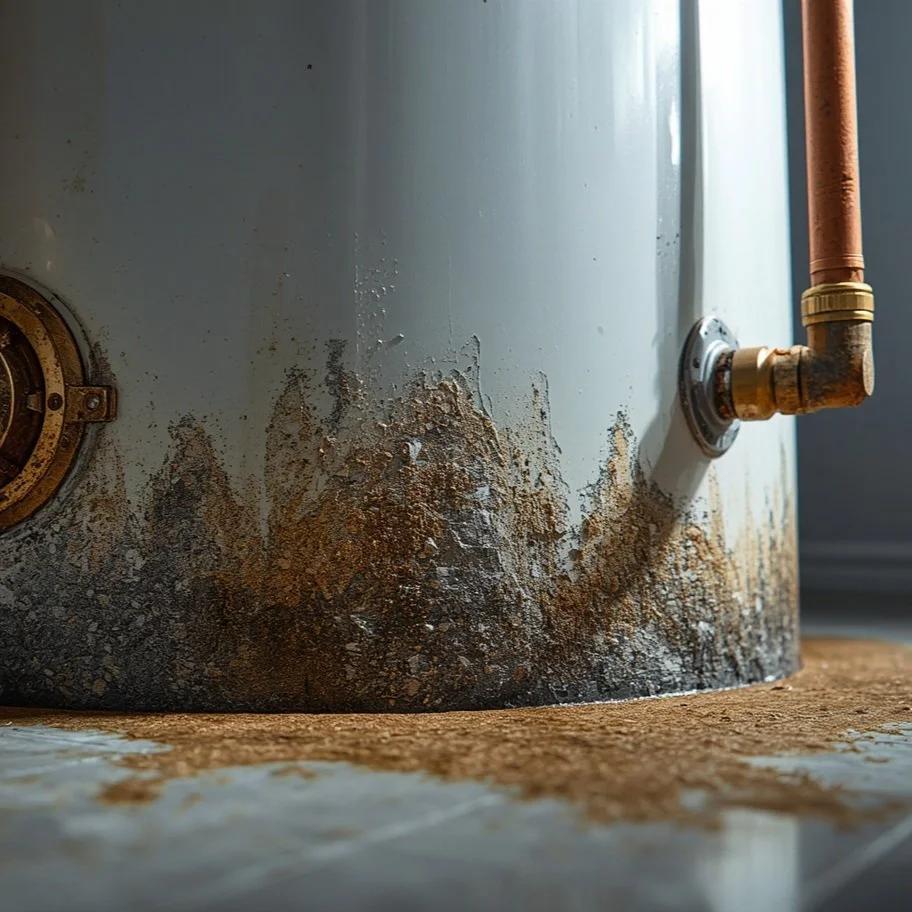
Age is one of the first factors to consider.
If your storage water heater is approaching or exceeding 10 years, it is sensible to begin planning for its eventual replacement.
That does not mean you must replace a functioning unit immediately.
Instead, monitor it more closely for leaks, corrosion, unusual noises, and changes in performance.
You can often find the manufacture date on the water heater’s rating label or determine it from the serial number using the manufacturer’s guidance.
If you are unsure how old your unit is, a plumber can help identify the model and assess its condition.
When replacement makes sense: The water heater is aging and has begun experiencing recurring problems or showing signs of deterioration.
A water heater that previously supplied enough hot water but now struggles to meet normal household demand may have a problem.
Possible causes include:
Sediment accumulation in the storage tank.
A failed electric heating element.
A malfunctioning thermostat.
Burner or gas control problems.
A damaged dip tube.
Increased household hot water demand.
Some of these issues are repairable.
For example, replacing a failed heating element may restore normal performance without replacing the entire water heater.
However, if an older unit repeatedly runs out of hot water despite repairs, replacement may be a better long-term solution.
Before purchasing a new heater, consider whether your household’s needs have changed.
Additional family members, longer showers, or new appliances may require a different capacity or recovery rate.
A leaking water heater requires prompt attention, but the source of the water matters.
Not every puddle near a water heater means the tank has failed.
Water may escape from:
A loose supply connection.
A drain valve.
A temperature and pressure relief valve discharge.
Nearby plumbing.
Condensation under certain operating conditions.
The storage tank itself.
Some connection or valve problems can be repaired.
However, a storage tank that has corroded through and is leaking generally requires replacement. Patching a deteriorated pressure vessel is not a safe long-term solution.
If you notice water around the heater, do not assume the source without inspection.
If water is spreading, shut off the appropriate water supply when safe and contact a professional.
Do not operate electrical switches or equipment in standing water.
Visible corrosion can be an early sign that water heater components are deteriorating.
You may notice rust around the base, connections, fittings, or other metal surfaces.
The location matters.
Surface rust on an external fitting does not necessarily mean the entire water heater needs replacement.
Corrosion involving the tank itself is more concerning, particularly when accompanied by moisture or leakage.
Rust-colored hot water can also indicate corrosion, but it may originate from household piping rather than the water heater.
If discoloration appears only when using hot water, the heater deserves investigation.
If both hot and cold water are affected, another part of the water supply system may be responsible.
A plumber can help determine whether the problem is repairable or whether the tank is deteriorating.
Storage water heaters can accumulate sediment over time.
As sediment collects near the bottom of the tank, it may interfere with heat transfer and create popping or rumbling sounds during heating.
These sounds do not automatically mean the water heater has failed.
In some cases, maintenance can improve performance.
However, persistent noise in an older unit may indicate substantial buildup or other deterioration.
If the water heater is also struggling to heat water or requiring frequent repairs, replacement becomes more reasonable.
Avoid attempting aggressive flushing on an aging, neglected tank without professional guidance. Disturbing deteriorated components can sometimes reveal existing weaknesses or create new problems.
Inconsistent hot water can make showers and everyday household tasks frustrating.
Possible causes include a faulty thermostat, failing heating element, burner problems, mineral buildup, or a system that is undersized for current demand.
Sometimes the issue is not the water heater at all.
A malfunctioning shower mixing valve or another plumbing fixture can cause temperature fluctuations at a single outlet.
Check whether the problem affects the entire house or only one fixture.
If several fixtures experience inconsistent hot water, a professional water heater inspection is appropriate.
Replacement may be recommended when the unit is aging and the underlying problems are extensive or recurring.
A single repair does not necessarily justify buying a new water heater.
However, repeated service appointments can change the financial picture.
Consider how much you have spent over the last year and whether additional components are likely to fail.
For example, replacing one inexpensive part on a relatively new heater may be worthwhile.
Replacing multiple major components on an older system may not provide good long-term value.
Ask for a written comparison of the repair cost and the installed replacement cost.
A useful rule of thumb is to consider replacement when a major repair approaches a substantial portion of the cost of a new system, especially when the heater is already near the end of its expected life.
This is a decision aid, not a universal rule.
The remaining warranty, condition of the tank, and expected reliability should also influence your choice.
Sometimes replacement is appropriate even when the existing heater is functioning.
A growing household may need more hot water than the original system was designed to provide.
Other homeowners may want to improve energy efficiency, recover storage space, or switch to a different water heating technology.
Examples include:
Replacing an undersized storage tank.
Upgrading to a properly sized tankless system.
Considering a heat pump water heater.
Changing fuel type when the property supports it.
Replacing an inefficient older unit during a renovation.
The right upgrade depends on your home’s plumbing, electrical or gas capacity, installation space, and hot water demand.
A professional assessment helps avoid buying a unit that is too small, unnecessarily large, or incompatible with the existing setup.
Certain warning signs require immediate professional attention.
These may include:
A gas odor near the water heater.
Soot or scorching around a gas appliance.
Signs of improper venting.
A damaged or leaking exhaust connection.
Repeated safety shutdowns.
Water near electrical components.
An abnormal temperature and pressure relief valve condition.
These issues do not all require replacement, but they should not be ignored.
If you smell gas, leave the area immediately, avoid switches and ignition sources, and contact your gas utility or emergency services from a safe location.
Do not attempt to repair gas controls, venting, or electrical components yourself.
A licensed professional can determine whether the problem can be corrected safely or whether replacing the water heater is necessary.
The best decision depends on more than the age of the unit.
A relatively new water heater with a failed thermostat may be a good repair candidate.
An older water heater with a leaking tank usually is not.
Use the following comparison as a starting point.
| Situation | Repair may be appropriate | Replacement may be better |
|---|---|---|
| Faulty thermostat | Yes, if other components are sound | If recurring failures make repair uneconomical |
| Failed heating element | Often | If the unit is old and deteriorating |
| Loose water connection | Often | If associated tank damage is present |
| Leaking storage tank | Generally no | Yes |
| Sediment-related noise | Sometimes | If severe and accompanied by other failures |
| Repeated breakdowns | Depends on age and cost | Often worth considering |
| Insufficient hot water | If caused by a repairable fault | If the unit is undersized |
| Significant tank corrosion | Usually not | Often |
| Aging but functioning normally | Continue monitoring | Plan for future replacement |
How old is the water heater?
A repair may be more worthwhile on a newer unit with many expected years of service remaining.
What exactly has failed?
A replaceable component is different from a leaking or corroded storage tank.
What will the repair cost compared with a replacement?
Compare the complete installed costs, warranty coverage, and likely future maintenance rather than only the immediate bill.
If you are uncertain, Dejusto Plumbing can inspect the equipment and explain whether water heater repair or installation is the more appropriate option.
Water heater replacement costs vary because the equipment is only one part of the project.
The final price depends on the type of heater, installation complexity, required upgrades, and applicable permits.
A straightforward replacement of a compatible storage tank may cost less than converting from a tank system to tankless.
Water heater type: Gas, electric, tankless, and heat pump systems have different equipment and installation requirements.
Tank capacity: Larger storage tanks may cost more and require additional space.
Installation location: A water heater in an accessible garage may be easier to replace than one in a cramped utility closet.
Plumbing modifications: Older connections, valves, or supply piping may need updating.
Gas or electrical upgrades: Some replacements require additional gas capacity, venting changes, dedicated circuits, or electrical panel evaluation.
Code compliance: Seismic restraints, drainage arrangements, venting, clearances, and other requirements may affect the scope of work.
Permits and inspections: Applicable local requirements should be confirmed before installation.
Removal and disposal: The existing heater must be disconnected, removed, and disposed of appropriately.
Because these factors differ from property to property, an on-site assessment is the best way to obtain a reliable estimate.
Avoid choosing a contractor based solely on the lowest advertised equipment price. Ask what is included in the complete installed quote.
If you have decided to replace your water heater, the next question is which system best fits your home.
Traditional tank and tankless water heaters can both provide reliable hot water when properly selected and installed.
A storage water heater heats and holds a supply of hot water in an insulated tank.
Advantages include relatively straightforward replacement, familiar technology, and generally lower initial equipment costs than comparable tankless installations.
The main limitation is that stored hot water can run out during periods of heavy use.
The system also experiences standby heat losses as it maintains the stored water temperature.
A tankless water heater heats water as it flows through the unit.
Because it does not store a large volume of hot water, it can reduce standby losses.
However, tankless systems have maximum flow rates.
If several showers and appliances need hot water simultaneously, the system must be properly sized to handle the demand.
Tankless installations may also require gas line, venting, electrical, or other infrastructure changes.
Heat pump water heaters use electricity to move heat from surrounding air into stored water.
They can offer substantial efficiency advantages compared with conventional electric resistance water heaters.
However, they need an appropriate installation environment, sufficient air volume or ducting, drainage for condensate, and suitable electrical infrastructure.
Not every home is an ideal candidate without modifications.
| Feature | Storage tank | Tankless | Heat pump |
|---|---|---|---|
| Hot water delivery | Stored supply | On demand, limited by flow rate | Stored supply |
| Typical upfront complexity | Often lower | May require upgrades | Depends on installation space and electrical setup |
| Standby heat loss | Yes | Minimal storage loss | Yes, but efficient heat transfer |
| Space requirements | Room for tank | Compact wall-mounted options | Tank plus air-space requirements |
| Maintenance | Tank and component maintenance | Descaling and component maintenance | Tank, filter, condensate, and system maintenance |
| Best fit | Many standard replacement projects | Homes with suitable infrastructure and demand | Homes prioritizing electric efficiency |
For a deeper comparison, read our previous article, Tank vs. Tankless Water Heaters for Cotati Homes.
That guide explores the differences in greater detail. This article focuses specifically on recognizing when replacement is necessary.
Choosing the right capacity is just as important as choosing the type of water heater.
An undersized system may leave family members waiting for hot water.
An unnecessarily oversized system may increase purchase costs or use more energy than needed.
Tank water heaters are commonly selected using household demand, tank capacity, and first-hour rating.
The first-hour rating estimates how much hot water a heater can supply during a busy hour, accounting for both stored water and heating recovery.
A household with several bathrooms and simultaneous morning showers may need a different system than a smaller home with modest hot water demand.
Tankless water heaters are sized based on the required flow rate and temperature rise.
A system must be capable of supplying enough heated water to the fixtures that may operate at the same time.
A unit that works well for one shower may not support two showers and a washing machine simultaneously.
Before choosing a replacement, think about whether your household is likely to change.
Additional occupants, a bathroom renovation, or a new appliance can affect future hot water demand.
A plumber can calculate the appropriate size using actual fixture requirements rather than relying only on household size.
A newer, more efficient water heater may reduce energy use, but savings depend on the equipment being replaced and how your household uses hot water.
For example, a modern high-efficiency system may use less energy than an older, inefficient model.
Tankless units can avoid the standby heat losses associated with storing hot water.
Heat pump water heaters can use substantially less electricity than conventional electric resistance models under suitable conditions.
However, the final utility savings depend on fuel prices, hot water consumption, installation quality, and equipment efficiency.
The U.S. Department of Energy’s Energy Saver water heating guidance explains the factors that influence energy use and operating costs.
When comparing products, review their Uniform Energy Factor (UEF) ratings and estimated annual operating costs.
Do not assume that the most expensive water heater automatically provides the best financial return.
A properly sized, efficient system that fits your home’s infrastructure is usually the more practical goal.
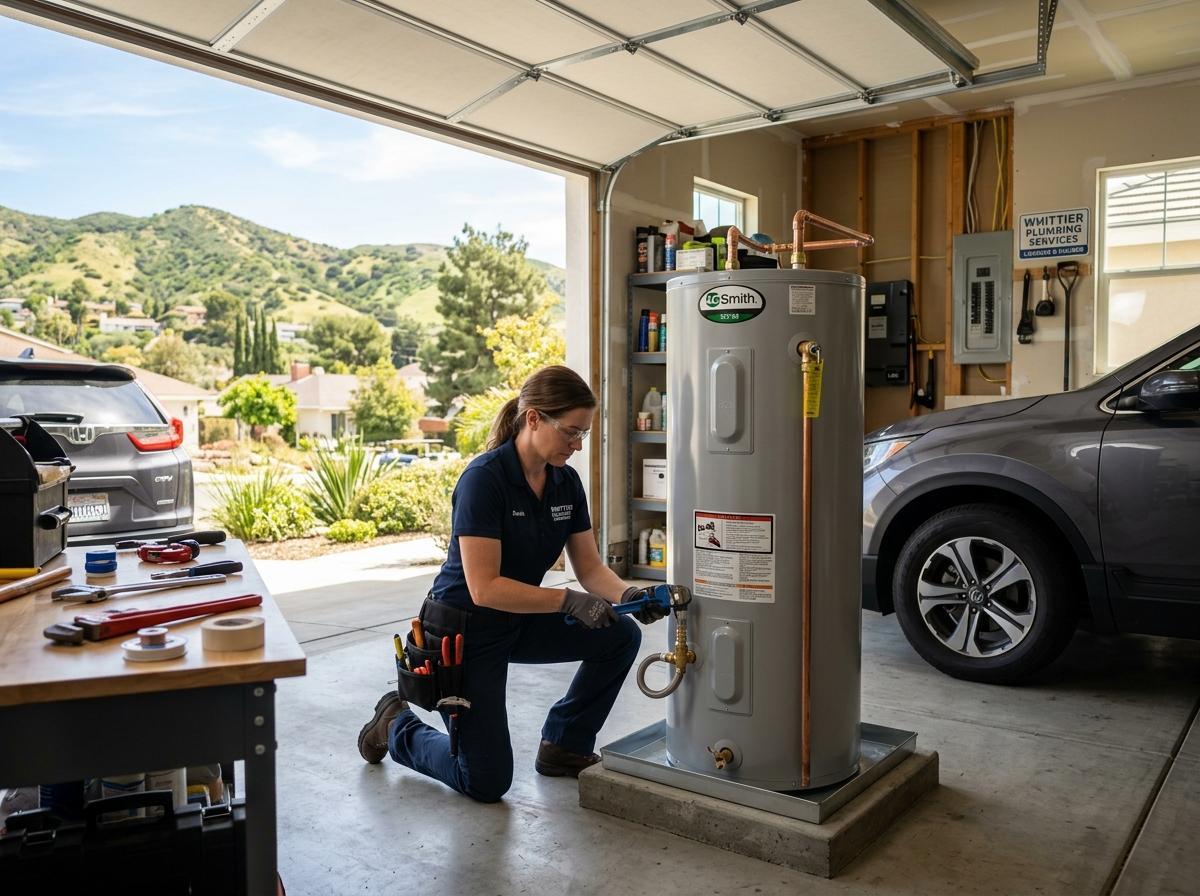
Knowing what to expect can make the installation process easier.
A plumber checks the current equipment, installation location, fuel source, connections, and household hot water requirements.
The inspection helps determine whether a compatible replacement is appropriate or whether upgrades are needed.
The homeowner and plumber review suitable models based on capacity, efficiency, warranty, available space, and budget.
If you are changing water heater types, additional planning may be required.
The installation must comply with applicable local building and safety requirements.
Depending on the project, permits, inspections, seismic restraints, venting, electrical connections, and other safety measures may be required.
A qualified installer should confirm the requirements for the specific Cotati property.
The existing water heater is safely shut down, isolated from the water and energy supplies, drained as appropriate, and removed.
Gas and electrical disconnections must be handled by qualified personnel.
The new system is positioned and connected according to manufacturer instructions and applicable code.
This may include new fittings, valves, venting, condensate drainage, or other approved components.
The installer checks for leaks, verifies operation, confirms safe heating performance, and evaluates required safety components.
For gas appliances, proper combustion and venting are particularly important.
Before the job is complete, the homeowner should understand the basic controls, recommended maintenance, warranty information, and warning signs to monitor.
Professional installation helps ensure the new water heater is correctly sized, safely connected, and ready for everyday use.
Replacing a water heater during an emergency can limit your choices.
When a tank suddenly leaks or stops heating, the immediate priority is restoring hot water and preventing property damage.
That may leave less time to compare energy-efficient models, investigate upgrades, or budget for installation.
Planning ahead gives you more flexibility.
If your water heater is nearing the later part of its expected service life, consider having its condition evaluated before a breakdown occurs.
You can then compare replacement options, understand potential installation requirements, and decide whether to replace it proactively or continue monitoring it.
Cotati has a mix of established neighborhoods, remodeled properties, and newer homes. Water heater installations can differ significantly between them.
Some homes have conventional gas storage units in garages or utility spaces. Others may have tankless equipment or installations that have been modified during renovations.
The appropriate replacement depends on the actual equipment and property conditions.
Dejusto Plumbing serves local homeowners throughout Cotati and surrounding Sonoma County communities. Learn more about our plumbing services in Cotati.
A new water heater is an investment, and proper maintenance can help protect it.
Different systems have different requirements.
Review the owner’s manual and arrange maintenance according to the manufacturer’s instructions.
Storage tank water heaters may benefit from periodic flushing when recommended for the model and local water conditions.
For older or neglected systems, consult a plumber before attempting maintenance.
Look periodically for moisture around accessible connections, valves, and the base of the unit.
Address unexpected water promptly.
Many storage tank water heaters contain a sacrificial anode rod that helps reduce tank corrosion.
Inspection and replacement intervals depend on the manufacturer, water conditions, and equipment design.
Tankless systems may require periodic descaling and cleaning of filters or other components.
Follow the manufacturer’s service recommendations.
Excessively hot water increases scalding risk and may waste energy.
Follow manufacturer guidance and appropriate household safety recommendations.
A qualified plumber can identify developing problems before they become major failures.
Regular maintenance does not guarantee a particular lifespan, but it can help maintain performance and reliability.